
ESC250 2025
Eurovision hits on Spotify vs. the ESC250: a comparison
In the age of streaming, Eurovision songs reach millions of listeners through platforms like Spotify. At the same time, there’s the annual ESC250, where fans vote for their all-time favorite Eurovision entries. How often do those two worlds — global streaming success and fan favorites — overlap? And where do they diverge? We take a closer look at several Eurovision entries that perform well on Spotify and compare their numbers with their rankings in the ESC250.
Some Eurovision songs manage to win over both the general public and die-hard fans. A clear example is Arcade by Duncan Laurence (Netherlands 2019). This melancholic ballad won the contest and became a global hit, with over 1.4 billion Spotify streams to date — a record for a Eurovision entry.
In the ESC250, Arcade initially ranked very high as well, climbing to 4th place in 2021. Although it has gradually dropped due to the influx of newer songs (landing at 16th in 2024), it remains a cherished evergreen among fans.
Euphoria
Another double success is Euphoria by Loreen (Sweden 2012). Her Eurovision-winning dance anthem sparked a wave across Europe and is considered one of the contest’s most influential songs. In the streaming era, Euphoria is still going strong, with an estimated 170 million streams.
Among fans, it’s legendary: it topped the ESC250 for ten consecutive years (2012–2021) and reclaimed the number one spot again in 2024. Loreen’s more recent hit Tattoo (Sweden 2023) is following a similar path. It has already surpassed 800 million streams and nearly topped the fan poll right away.
In 2023, Tattoo placed second (just behind Käärijä’s Cha Cha Cha), and in 2024, it held onto the #2 spot — this time right behind Euphoria.
Zitti e buoni
Zitti e buoni by Måneskin (Italy 2021) also proves that mainstream success and fan appreciation can go hand in hand. After the contest, this rock entry became a global phenomenon.
With over 571 million Spotify streams, Måneskin conquered international charts, while the song placed second in the ESC250 in 2021. Its edgy rock energy resonated with both rock fans and Eurovision followers alike.
Some older Eurovision hits also continue to bridge both worlds. Fairytale by Alexander Rybak (Norway 2009) was a major hit in Europe and now has nearly 500 million Spotify streams — a remarkable feat for a pre-streaming era song. Fans still cherish Fairytale, which continues to appear in the ESC250, usually near the top 20.
Waterloo
Of course, we can’t forget Waterloo by ABBA (Sweden 1974). This timeless classic has more than 400 million Spotify streams and remains a radio staple. It consistently appears in the ESC250, although newer fan favorites often place higher these days.
Still, ABBA’s 1974 victory is a rare example of a Eurovision song becoming a pop classic beloved by both the general public and Eurovision fans.
Snap
Some songs, however, reach millions of listeners around the world but fail to generate the same enthusiasm among Eurovision fans. Snap by Rosa Linn (Armenia 2022) is a textbook case. After the contest, it went viral on TikTok and became a surprise global hit, racking up 1.3 billion Spotify streams — an incredible feat for a song that only placed 20th in the contest.
But in the ESC250, Rosa Linn couldn’t translate that popularity into fan votes: Snap reached just 64th place in 2022 and dropped to 145th a year later.
In other words, TikTok embraced the song, but the Eurovision community largely overlooked it.
Queen of Kings
A similar pattern appears with Queen of Kings by Alessandra (Norway 2023). This uptempo entry went viral thanks to its catchy chorus and pulled in over 200 million streams.
In the ESC250, it landed in 16th place in 2023 but already dropped to 55th in 2024.
Toy
Some earlier Eurovision hits that made it to the charts also rank surprisingly low with fans. Toy by Netta (Israel 2018) won the contest and gathered over 100 million streams, but never climbed very high in the ESC250.
In the year it won, Toy debuted at 21st, dropped to 46th a year later, and ended up at 127th in the most recent edition in 2024.
If I Were Sorry
Another example is If I Were Sorry by Frans (Sweden 2016). This radio-friendly pop song became a European hit at the time and quickly reached over 100 million Spotify streams.
Yet it’s virtually absent from recent fan rankings. In 2024, the song ranked just 420th. Its highest ever position was 50th, back in 2016.
In 2020, it dropped out of the list entirely. It briefly returned in 2021 at #186, but hasn’t appeared in the ESC250 since 2022.
Shum
Eurovision fans often have their own favorites — songs that may not achieve mainstream fame but gain cult status within the community.
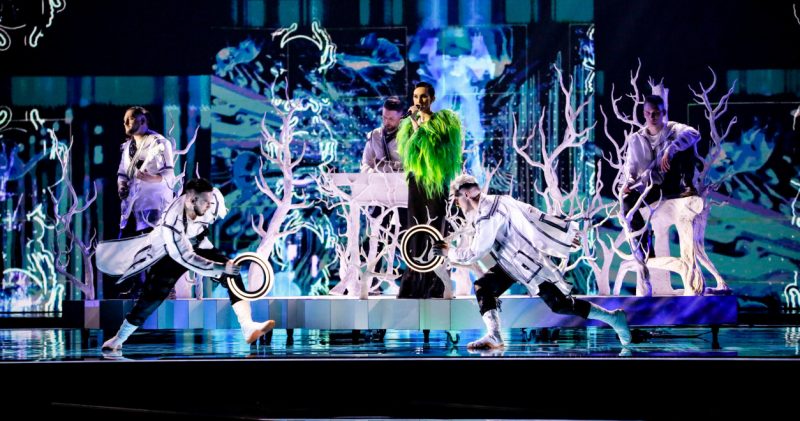
A great example is Shum by Go_A (Ukraine 2021). With its hypnotic folk beats, the song reached 3rd place in the ESC250 in 2021 — higher than many actual contest winners.
It has since gathered more than 117 million Spotify streams, though it never became a true radio hit.
Still, Shum remains beloved among fans, landing once again in the ESC250 top 10 in 2024.
Fuego
Another fan favorite is Fuego by Eleni Foureira (Cyprus 2018). Though it finished second at Eurovision, many fans still see it as the “real” winner of that year.
Fuego has secured multiple ESC250 top-5 placements and remains a must-play at every Eurovision party. Internationally, however, it didn’t break through in a big way — ‘just’ 114 million Spotify streams to date.
Mainstream success and fan love don’t always go hand in hand. Songs like Shum and Snap show how different the general audience’s taste can be from that of Eurovision fans.
But every now and then, a magical entry comes along that bridges both worlds. And that’s how Eurovision legends are born.